

Looking for the perfect fish to fill out a small aquarium? Instead of limiting yourself to a few larger fish, consider stocking your tank with a group of nano fish. Small aquarium fish species pack a lot of personality into their little bodies, and they’re perfectly sized for nano tanks under 20 gallons.
In this guide, we’ll explore some of the best nano fish types along with their care requirements to help you decide which are the right fit for your tank. If you’re ready to get started, let’s dive in!
The Top 8 Nano Fish Types to Consider
From brightly colored rasboras to bottom-feeders in miniature, our list of the best nano aquarium fish will help you make the right choice for your tank.
1. Chili Rasbora (Bororas brigittae)
Named for their bright red coloration, chili rasboras make vibrant additions to the nano tank. They only grow to about ¾ inch long, so it’s easy to accommodate a small school of 8–12 fish. The more you keep together, the more confident and active they’ll be, so consider making this species the primary focus of your nano tank.
Chili rasboras are peaceful by nature and pair well with other nano fish like ember tetras, green neon rasboras, and pygmy corydoras. They prefer heavily planted tanks as long as there’s room to swim in the middle.

$38.95
Unit price
per

$19.50
Unit price
per
2. Toothpick Fish (Indostomus paradoxus)
Also known as the armored stickleback, the toothpick fish is a small species with a long, narrow body and small fanlike fins. These fish hail from the slow-moving waters of Myanmar that are lush with vegetation and algae, so planted setups are ideal.
Toothpick fish also like their water on the softer, slightly acidic side, so aim for a pH between 6.5 and 7.5 with a temperature of 72–80°F.
Toothpick fish only grow up to an inch long, and they are best kept in groups of 6 in planted tanks with pristine water quality. Sponge filters tend to work well for these fish, as they may struggle in strong currents.
3. Celestial Pearl Danio (Danio margaritatus)
Sometimes called the galaxy rasbora, the celestial pearl danio stands out with its dark body covered in golden spots.
These little fish grow up to an inch long and develop bold red-orange coloration on their fins as they mature. A minimum group size of 6 is recommended, but larger schools of 10–15 individuals will help this species shine.

One thing to keep in mind with this species is that they prefer cooler temperatures, so aim for a temperature range of 72–76°F in your tank. Celestial pearl danios are adaptable to a wide range of pH levels from 6.6–8.0, but it’s important to keep the water parameters as consistent as possible to prevent stress.

 Pre-Order
$49.95
Unit price
per
 Pre-Order
$42.95
Unit price
per
4. Emerald Dwarf Rasbora (Celestichthys erythromicron)
The name of this species says it all. Emerald dwarf rasboras grow no larger than 1.5 inches, and they have slender bodies that range from emerald green to blue or even purple, depending on the lighting.
As with many fish, males of the species tend to be more brightly colored than females, and they may develop red coloration on the fins when fully mature.
Wild emerald dwarf rasboras are found in one particular lake in Myanmar, which has crystal-clear water, lush vegetation, and a loamy substrate.
As such, captive specimens are most likely to thrive in planted setups with slightly cool, clean water in the 7.0 to 8.0 pH range. Regular water changes are key to keeping water quality high for this species.
5. Pygmy Corydoras (Corydoras pygmaeus)
These little bottom-dwellers make perfect additions to any nano tank, especially if you’ve already stocked species that prefer the middle to upper ranges of the water column.
Pygmy cories grow to a maximum of 1 inch, and they do best in groups of 6 or more. This species is easily identified by its silvery body, divided horizontally by a thick black stripe.
Pygmy corydoras are active fish, so don’t be alarmed if you see them hovering in the middle of the tank or darting up to the surface for a quick gulp of air.
Planted tanks work well for this species, and they prefer moderately soft, slightly cool water with a pH range of 6.4–7.5 and a temperature range of 72–78°F.

$59.95
Unit price
per

$24.95
Unit price
per
6. Gertrude’s Spotted Blue Eye Rainbowfish (Pseudomugil gertrudae)
Though their name may be a bit of a mouthful, Gertrude’s spotted blue eye rainbowfish are well worth a second look.
These dwarf rainbowfish stay under 1.5 inches in length and develop iridescent yellow and blue coloration as they mature. They display a generous array of fins that grow more fanlike over time, giving this species a truly unique appearance.
Like other rainbowfish, this species is a peaceful community fish compatible with other nano fish and dwarf shrimp. They tend to occupy the upper level of the tank, but even so, they can easily be outcompeted for food due to their timid natures, so take care with feeding.
7. Blue Eye Red Neon Rainbowfish (Pseudomugil luminatus)
Still somewhat rare in the aquarium trade, the blue eye red neon rainbowfish is named for its intense neon red to red-orange coloration.

These little fish stay under 1.5 inches in size, but they stand out against the lush green of a mature planted tank. This species of rainbowfish is best displayed in groups of 6 or more and can be kept with dwarf shrimp and other small, community-oriented species.
The key to achieving maximum coloration with blue-eyed red neon rainbowfish is a balanced but varied diet. Choose small foods like finely crushed flakes or micro-pellets and supplement them with baby brine shrimp, daphnia, and micro worms.

$21.95
Unit price
per
 Pre-Order
$23.95
Unit price
per
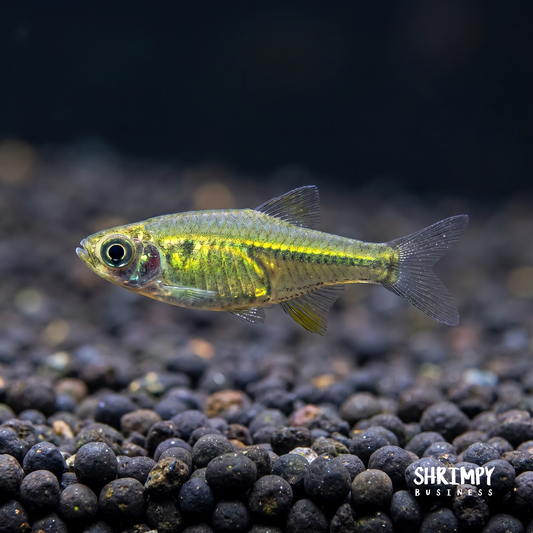
8. Green Neon Rasbora (Microdevario kubotai)
With their bright green coloration, green neon rasboras are somewhat unusual in the aquarium trade.
They’re perfect for nano tanks, topping out around 1 inch, and can be particularly stunning in large schools of 10 or more. To make your rasboras stand out, choose a dark substrate and provide a varied diet of dried, frozen, and live foods.
Because green neon rasboras do best in larger schools, they work well in single-species nano tanks. If you have a larger tank, however, these fish are compatible with peaceful bottom-dwellers and other small rasboras, tetras, danios, and even dwarf shrimp.
Special Care Instructions for Stocking Nano Fish
No matter what types of nano fish you stock in your tank, it’s important to set up your nano tank right and keep aquarium parameters stable. Test your tank water weekly to check for ammonia spikes and monitor for swings in temperature or water quality.
Performing small but frequent water changes is crucial for sustaining a healthy nano tank environment, so do yourself a favor and establish an aquarium maintenance routine early on.
It’s also crucial to feed your nano fish properly. While many smaller fish will accept finely crushed flakes, some prefer small fish foods like micro-pellets or baby brine shrimp.
Keep in mind that nano fish don’t need as much food as larger fish, so take care to avoid overfeeding. Feed only as much as your fish will consume within 1–2 minutes.
Finally, monitor your nano fish for signs of stress. Conditions can change more quickly in small tanks than large ones, and familiarizing yourself with what normal behavior looks like for your fish enables you to spot developing problems more quickly. Prompt action can make the difference between a temporary fluctuation and a full-blown problem.
Explore the selection of nano aquarium fish and learn more about nano tank fish care in our blog.
If you have questions about selecting, stocking, or caring for nano fish, Shrimpy Business can provide expert guidance.
Contact us to get personalized advice and ensure your nano tank thrives.