



Panda Loach
Panda Loach
Couldn't load pickup availability
About This Species
To protect our animals and to ensure they get to our customers healthy, we will only ship orders with Nano Fish via UPS Next Day Air.
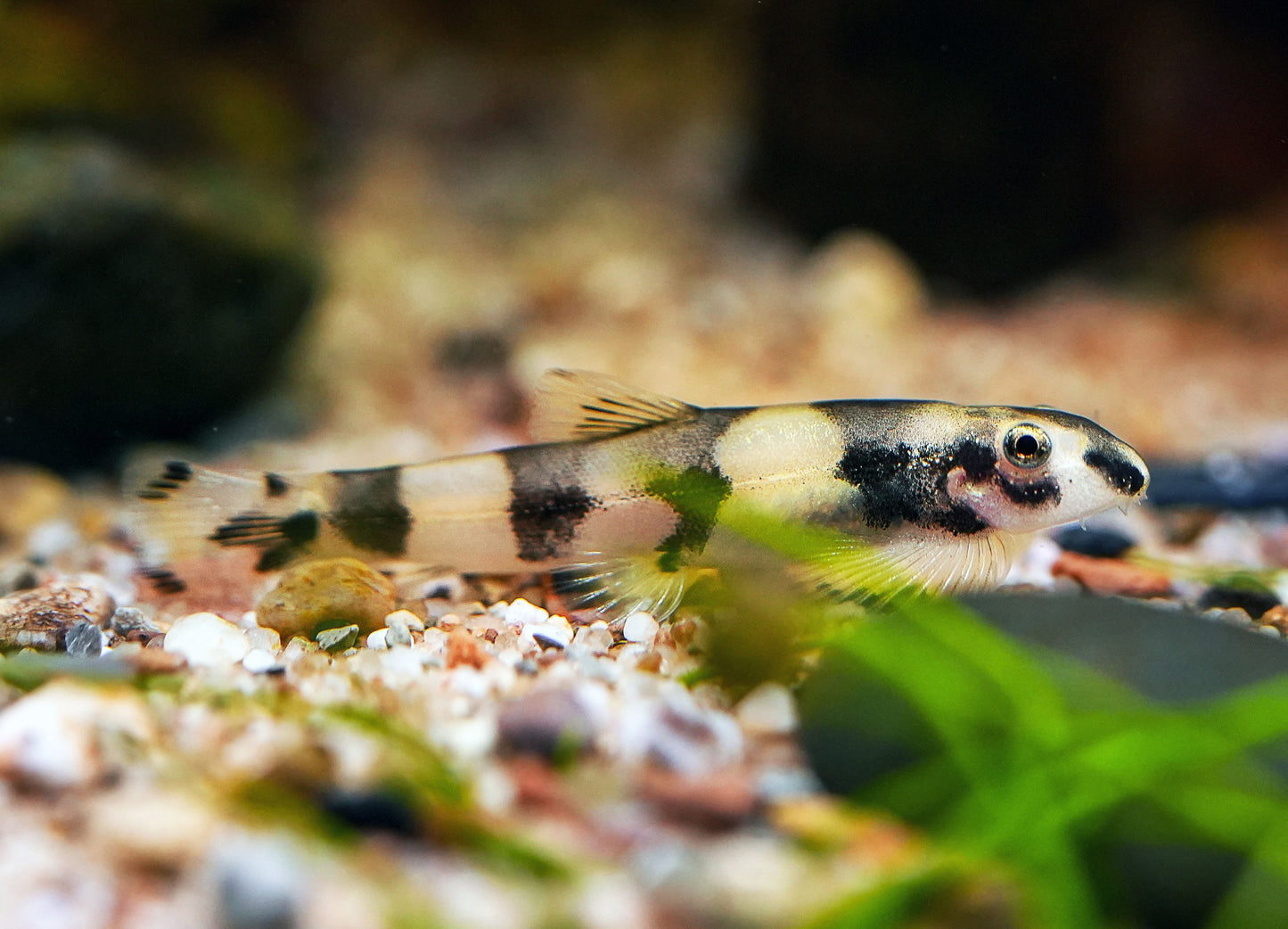
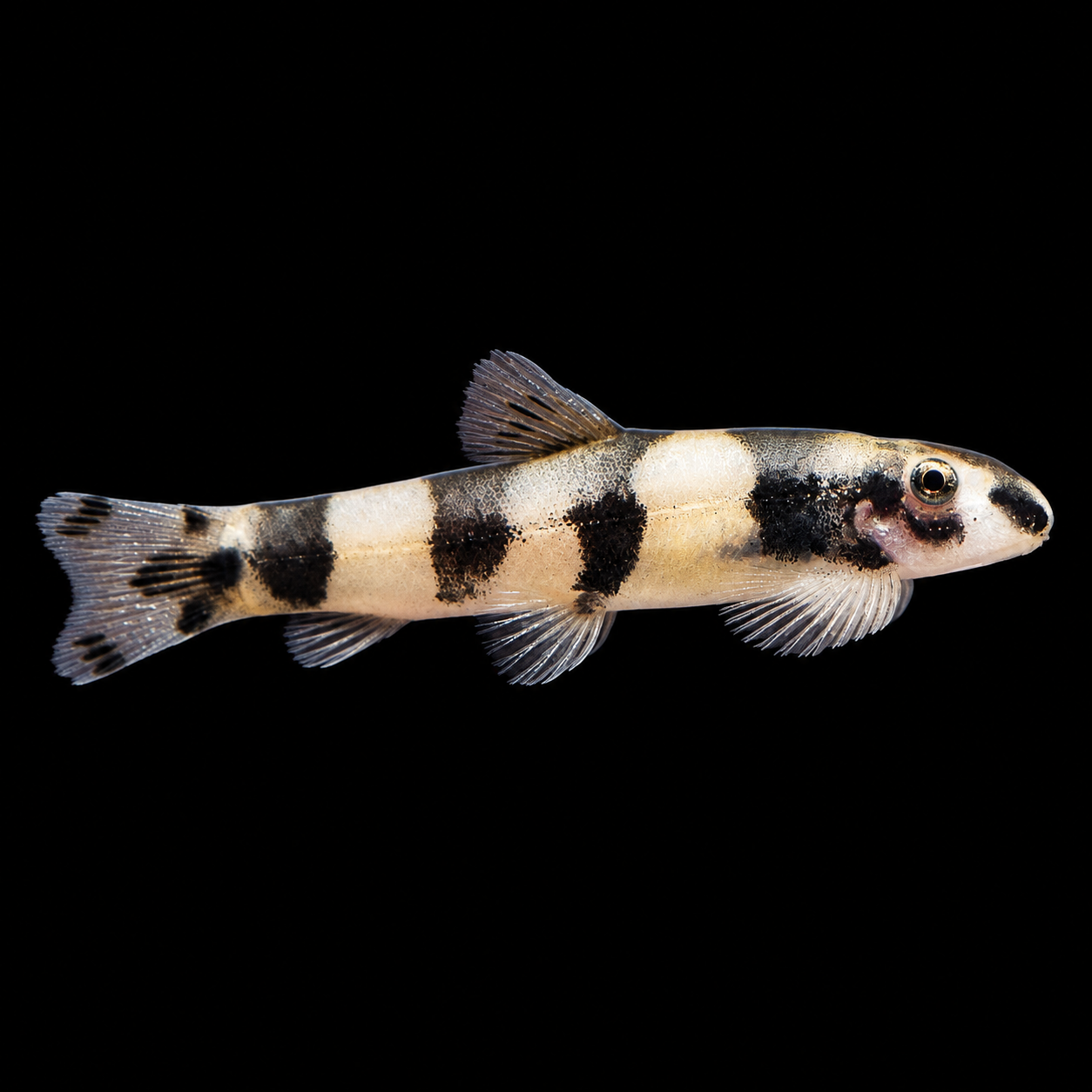
The Panda Loach (Yaoshania pachychilus) is a rare freshwater hillstream loach known for its dramatic juvenile coloration and active, playful personality. Young Panda Loaches display bold black-and-white bands that give the species its name. As they mature, the pattern gradually develops into a more intricate gold, brown, and black reticulated appearance.
Reaching approximately 2 to 2.4 inches as adults, Panda Loaches remain relatively small but require more specialized care than a typical nano fish. They thrive in mature aquariums with clean, highly oxygenated water, strong current, and plenty of established algae and biofilm for grazing.
🐟 About This Fish
The Panda Loach is a peaceful and highly active bottom-dweller native to fast-flowing mountain streams in Guangxi, China. Its flattened body and broad fins allow it to grip rocks and move comfortably through strong current.
Juveniles display the most recognizable black-and-white panda pattern. As the fish matures, the bands become more subdued and develop into a unique spotted or reticulated pattern. Adults are social and are best kept in a small group rather than alone.
🌊 Aquarium Care
Panda Loaches should be introduced only to a mature, fully cycled aquarium. They require very clean, oxygen-rich water and moderate to strong current that recreates their natural hillstream environment.
Although they can tolerate some variation in water chemistry, they are sensitive to poor water quality, low oxygen levels, and unstable conditions. Regular water changes and strong filtration are important for long-term health.
🪨 Tank Setup
Provide a river-style setup with smooth rocks, rounded pebbles, caves, driftwood, and open grazing surfaces. Strong lighting can be helpful because it encourages the growth of soft algae and biofilm.
Hardy plants such as Anubias, Java fern, and Bucephalandra can be included and will not be damaged by these loaches. A longer aquarium with more bottom surface area is preferable to a tall tank.
A 20-gallon or larger aquarium is recommended for a small group. Keep at least four together when possible, and provide multiple feeding and resting areas to reduce competition.
🍽️ Diet
Panda Loaches naturally graze on soft algae, biofilm, and the tiny organisms living on rocks and other aquarium surfaces. A mature aquarium with established grazing material is essential.
Our Panda Loaches are fed a combination of:
• Frozen daphnia
• High-quality sinking pellets
• High-quality flake food
Foods rich in algae or plant matter should make up a meaningful part of the diet. Frozen meaty foods can be offered for variety, but they should not become the primary food source because a diet that is too high in protein may cause health problems.
🤝 Tankmates
Panda Loaches are peaceful and can be kept with small community fish that tolerate cooler, highly oxygenated water and stronger current.
Good tankmates may include small rasboras, peaceful danios, hillstream loaches, freshwater gobies, and other calm species that will not outcompete them for food.
They can generally be kept with dwarf shrimp, although newly hatched shrimplets may occasionally be eaten. Avoid large, aggressive, or slow-moving fish that require warm, low-flow conditions.
🐣 Breeding Notes
Reliable breeding information remains limited, although successful aquarium breeding has been reported.
Hobbyist observations suggest that adults may spawn beneath rocks or inside small caves. Eggs can fall into coarse gravel, where newly hatched fry remain protected and feed on microorganisms during their earliest stages. A mature aquarium with abundant natural food appears especially important for fry survival.
📏 Recommended Water Parameters
Temperature: 68° to 75° F
pH: 6.5 to 7.5
KH: 4 to 8 dKH
Minimum tank size: 20 gallons for a small group
Adult size: Approximately 2 to 2.4 inches
Origin: Guangxi, China
❤️ What We Like About This Fish
• Bold black-and-white juvenile coloration
• Unique reticulated adult pattern
• Active, outgoing, and entertaining behavior
• Peaceful with most small community fish
• Regularly grazes algae and biofilm
• Safe with live aquarium plants
⚠️ Important Notes
Panda Loaches are not ideal for brand-new or low-flow aquariums. They require a mature tank with strong oxygenation, excellent water quality, and established algae and biofilm.
They should be kept in a small group and should not be expected to survive on prepared foods alone. Avoid consistently warm water and diets that rely too heavily on high-protein frozen foods.