

Looking for a simple way to beautify your aquarium without redesigning your setup or significantly adding to your maintenance routine? Floating aquarium plants are a simple solution that can benefit your tank, both functionally and aesthetically. In addition to improving water quality, reducing algae growth, and providing shelter for your fish, floating plants give your tank a natural appeal with minimal effort.
Here we discuss the benefits of floating aquarium plants, the top varieties for home aquariums, and practical care tips to get you started. Let’s dive in!
Benefits of Floating Aquarium Plants
Floating plants come in a wide array of shapes and colors, making them an attractive addition to any home aquarium. Beyond their visual appeal, however, adding floating plants to your tank can come with significant benefits. Here are some examples:
-
Increased oxygenation. Live plants produce oxygen through the process of photosynthesis, and oxygen is crucial for fish health.
-
Hiding places for fish. Shy or timid fish species may appreciate the overhead cover provided by floating plants, while others may enjoy swimming among the roots.
-
Natural food source. Small floating plants like duckweed make healthy snacks for fish, and dangling roots provide a perfect surface to cultivate biofilm and microorganisms your fish can eat.
-
Competition for algae. By competing for nutrients and light, floating plants may help reduce excessive algae growth in your tank.
Even if algae isn’t typically a problem in your aquarium, live plants can still help improve water quality by managing excess nutrients. Nitrates, ammonia, and phosphates are all vital nutrients for plant growth, but can be harmful to fish in excess.
Best Floating Plants for Home Aquariums
Floating plants are generally easy to maintain and adapt to various tank conditions. However, it’s still a good idea to put a little thought into the species you select to ensure they’re a good fit for the size of your tank, your lighting setup, and your tank inhabitants.
$14.95
Unit price
per

$35.95
Unit price
per
Here’s a quick introduction to some of the best floating plants for aquariums:
-
Amazon Frogbit (Limnobium laevigatum) – Looking a bit like miniature lily pads, Amazon frogbit grows in round rosettes right on top of the water with short roots underneath. This plant is great for surface cover and shade, but it won’t interfere with swimming space for your fish.
-
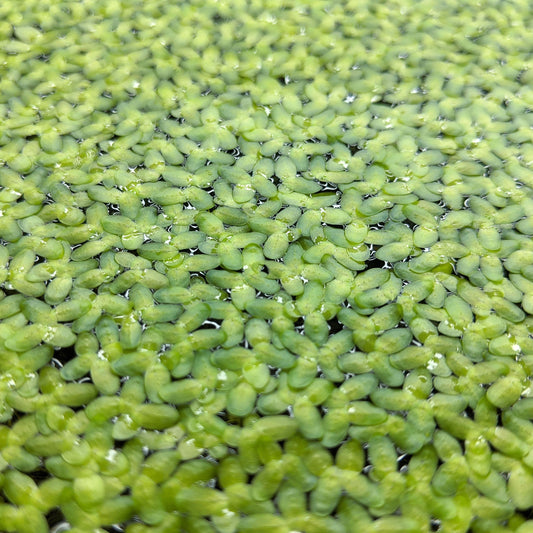
Duckweed (Lemna minor) – Perfect for tanks with herbivorous fish, duckweed grows very quickly and has small, edible leaves. Keep in mind that it’s hard to eliminate once introduced, so take care with this plant.
-
Dwarf Water Lettuce (Pistia stratiotes) – This fast-growing floating plant is easy to maintain and only requires moderate to bright indirect light. Because it grows quickly, you may need to thin the plant occasionally if you want to keep it from covering the entire surface of your tank.
-
Red Root Floater (Phyllanthus fluitans) – Similar in appearance to frogbit, this plant is known for its red hue, which is particularly noticeable in the long roots. Though relatively easy to grow, this plant needs high-intensity light to develop its red color.
-
Cabomba (Cabomba caroliniana) – This plant produces fanlike growth on long green stems that add a splash of color to the aquarium. Floating on the surface, it provides cover for fish and fry while boosting oxygen levels.
-
Hornwort (Ceratophyllum demersum) – Popular for its bushy growth, hornwort works well as a submerged plant in aquariums that doesn’t need to be rooted. It prefers calm water and grows quickly, making it a strong oxygenator.
-
Anacharis (Egeria densa) – One of the easiest plants to grow in aquariums, anacharis grows in long stems with narrow leaves. It’s a low-maintenance plant that grows quickly and can be free-floating in the tank, not just on the surface.

How to Care for Floating Aquarium Plants
Though floating aquarium plants are relatively easy to care for, they need the same things all plants do: water, light, and nutrients. Water is a given in an aquarium, but the rest you’ll need to be thoughtful about. Here are some general care tips for floating aquarium plants:
-
Provide full-spectrum light for at least 6 hours per day (some plants will require more). Consider putting your lights on a timer, as excessive light could promote algae growth.
-
Trim and thin your plants regularly to keep them from taking over the tank. For floating plants, between 40-60% surface coverage is ideal.
-
Test your aquarium water weekly, checking the nitrate and phosphate levels. If these are too low, you might need to provide some liquid fertilizer.
-
Quarantine new plants before adding them to your tank to ensure you’re not introducing unwanted pests or disease.
-
Keep the water temperature in your tank stable between 74° to 80°F, using an in-tank heater if necessary.
-
Perform small weekly water changes around 10% of the total tank volume to remove organic waste and manage excess nutrients.
If you’re curious to give floating plants a try, start with one species to see how it adjusts to your tank. Adding too many could lead to competition for nutrients, so it’s a good idea to start small to make sure your tank can support the plants you choose.
Are Floating Plants Right for Your Tank?
Floating plants are a good fit for many aquarium setups, but there are a few details to consider. Because they float on top of the water, filter systems that create strong surface agitation might not be suitable. You’ll also need to ensure there’s adequate light for your plants to grow, and, in some cases, you may need to provide liquid fertilizer.
There’s no harm in adding a few floating plants to your tank to see if they work out. If conditions are right, they may even reproduce and create a beautiful floating sanctuary for your fish!
Want to diversify your aquascape with rooted plants or carpeting plants? Check out the selection at Shrimpy Business!