



Live Arrival Guarantee
Every order is covered by our Live Arrival Guarantee. If any shrimp, fish or invertebrate arrives dead, we'll do our best to reimburse you for the lost animals. Just photograph them and start a claim within 24 hours of delivery.
We guarantee the live arrival of eligible livestock when all shipping and delivery requirements are followed. If an eligible animal arrives deceased, please follow the claim requirements for the applicable product below.
In the rare of case of Dead On Arrival (DOA) please:
To submit a claim within 12 hours of the first delivery attempt or pickup.:
•Take clear photos of the invertebrate(s) and/or fish in the unopened bag.
• Take a clear photo of the invertebrate(s) and/or fish after opening the bag and lay it down on a paper towel so the quantity is clear and visible.
• Submit your claim within 12 hours through our DOA claim process.- https://shrimpybusiness.com/a/returnzap
For approved claims, customers will receive a store credit or a gift card for the cost of the affected invertebrate(s) and/or fish, or a replacement. Replacement shipping costs are the customer's responsibility. In some cases depending on the quantity and value of order we may reship the order.
Note : Customers are responsible for ensuring they have an appropriate aquarium setup and suitable water conditions before ordering an axolotl.
Snails
Snails may remain inactive for several days after arriving due to transportation stress.
Please allow up to 5 days for a snail to become active after arrival.
If a snail has not moved after 5 days or shows clear signs that it has died or start to smell, contact us with photos and your order number. For approved claims, customers will receive a store credit or a gift card for the cost of the affected snails, or a replacement. Replacement shipping costs are the customer's responsibility.
Aquatic Plants
Aquatic plants may experience temporary stress after shipping. Wilting, melting leaves or dry-looking stems do not necessarily mean that a plant has died.
Please allow the plant time to acclimate and recover after arrival for almost 15 days.
If a plant arrives severely damaged or appears to be dead upon arrival, contact us as soon as possible with the clear photos of the plant as received on info@shrimpybusiness.com
Plant claims will be reviewed individually based on the condition of the plant upon arrival.
DOA Claim Requirements
DOA claims must be submitted within the applicable timeframe listed above.
Claims may not be approved if:
• The required photos or documentation are not provided.
• The animal was left outside or unattended for an extended period.
• The package was delivered to an incorrect address provided by the customer.
• The package was forwarded to another address or the package was routed to a P.O box or mail box.
• A package was held at a carrier location and was not promptly picked up.
• The customer did not follow the applicable shipping or delivery requirements.
Carrier delays or forwarding errors will be reviewed on a case-by-case basis.
Incorrect or Missing Items
If an order arrives with a missing or incorrect item, contact us as soon as possible.
Email us on info@shrimpybusiness.com
• Order number.
• Photos of the package and shipping label.
• Photos of the product received.
• A description of the issue.
Our team will review the order and determine the appropriate resolution.
Refunds & Store Credit
Approved store credit refunds are generally limited to the affected product unless otherwise stated in the applicable policy.
For approved DOA claims, customers may receive a store credit or gift card for the cost of the affected eligible livestock.
Original shipping charges are generally non-refundable.
Replacement orders may require a new shipping charge borne by the customer unless stated otherwise
Juvenile Double Red Agassiz's (Apistogramma agassizii)
Juvenile Double Red Agassiz's (Apistogramma agassizii)
Couldn't load pickup availability
- 100% Live Arrival Guarantee
- Fast, reliable shipping across the US
- Climate-adapted, insulated packaging

Juvenile Double Red Agassiz's (Apistogramma agassizii)


About This Species
To protect our animals and to ensure they get to our customers healthy, we will only ship orders with Nano Fish via UPS Next Day Air.
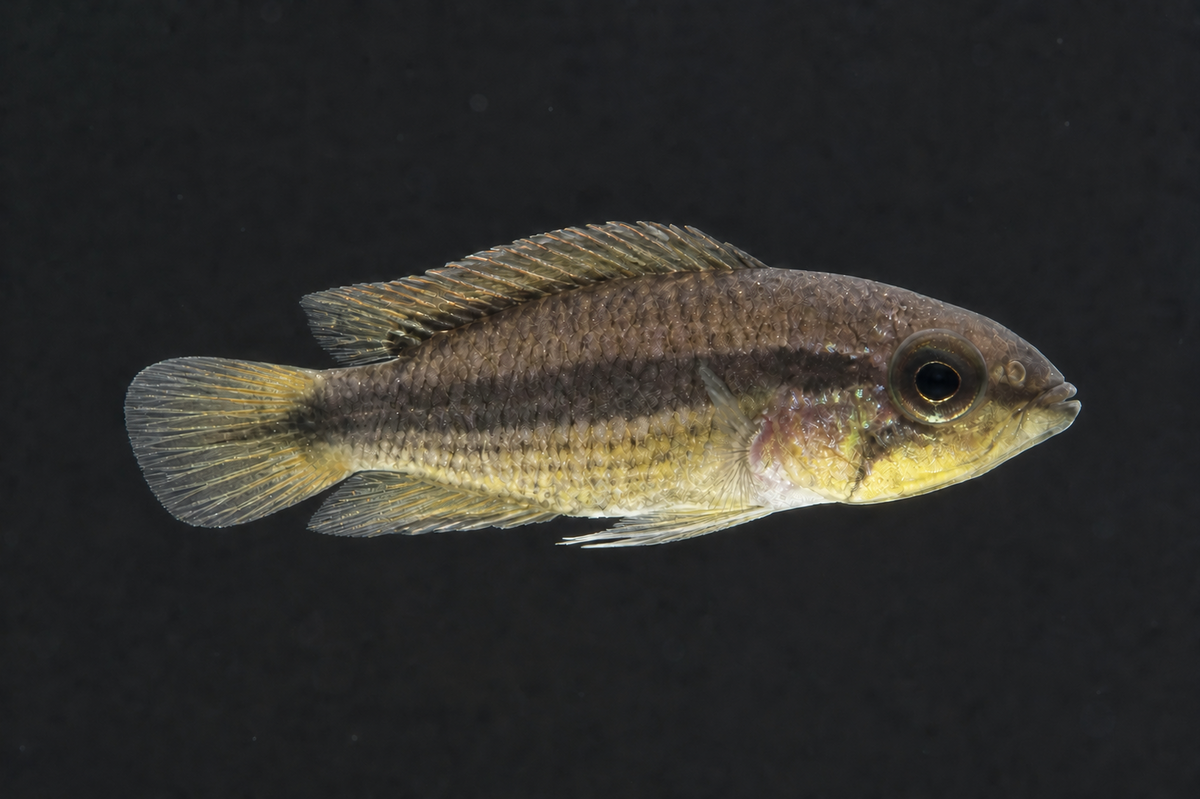
The Juvenile Double Red Apistogramma (Apistogramma agassizii) is a young, captive-bred South American dwarf cichlid with the potential to develop brilliant red coloration in the dorsal and caudal fins. As they mature, males may display intense red fins, iridescent blue or green markings, and a bold horizontal stripe. Females typically remain smaller and develop bright yellow coloration when breeding or guarding fry.
Juveniles may not yet show their adult colors, fin shape, or clear differences between the sexes. Their final appearance will vary with age, sex, genetics, diet, mood, and aquarium conditions.
About This Fish
The Double Red Apistogramma is a selectively bred color variety of Agassiz’s Dwarf Cichlid. These juveniles are sold at a young age, allowing aquarists to watch their coloration and personalities develop as they mature.
Young fish spend much of their time exploring the lower levels of the aquarium, searching through the substrate, and investigating caves. Because they are juveniles, sex cannot always be determined reliably at the time of purchase unless specifically stated.
Aquarium Care
Juvenile Double Red Apistogrammas do best in a mature aquarium with clean, warm, soft water and stable conditions. They prefer an acidic to neutral pH and may struggle in consistently hard or alkaline water.
Gentle filtration and low to moderate current are ideal. Avoid sudden changes in temperature or water chemistry. Regular partial water changes and low nitrate levels are especially important for healthy juvenile growth.
Small juveniles can be sensitive to aggressive tankmates and competition at feeding time. Make sure each fish is able to eat and has access to a secure hiding place.
Tank Setup
Provide fine sand, driftwood, leaf litter, dense plants, and several caves or shaded hiding places. Coconut caves, small ceramic caves, Cholla wood and rock formations work especially well. Plants and wood should be arranged to create visual barriers and sheltered areas.
Botanicals such as Indian almond leaves, Casuarina cones and Cholla wood can help create a more natural environment. Hardy plants such as Anubias, Java fern, Cryptocoryne, and floating plants are excellent choices.
A 20-gallon aquarium is recommended for a future adult pair. Larger aquariums are necessary for groups, multiple males, or community setups. Plan for their adult territorial behavior rather than choosing a tank based only on their juvenile size.
Diet
Juvenile Double Red Apistogrammas should receive small, protein-rich foods that are easy to swallow. Excellent options include frozen or live baby brine shrimp, daphnia, cyclops, finely chopped bloodworms, microworms, and appropriately sized micro pellets.
Feed small portions once or twice daily, making sure food reaches the lower areas of the aquarium. A varied diet will support healthy growth, proper development, and stronger adult coloration.
Tankmates
Juveniles can be kept with peaceful fish that will not bully them or outcompete them for food. Suitable tankmates may include pencilfish, small peaceful tetras, hatchetfish, and rasboras that tolerate warm, soft water.
Avoid aggressive fish, fin nippers, large predatory species, and territorial bottom-dwelling cichlids. Corydoras and similar bottom dwellers may enter an Apistogramma’s territory and can become a source of conflict once the fish mature or begin breeding.
Dwarf shrimp and shrimplets should not be considered safe. Larger shrimp may sometimes coexist with these fish, but small shrimp may be eaten as the Apistogrammas grow.
Breeding Notes
These juveniles are not sold as breeding-ready adults. They must first mature, establish territories, and form a compatible pairing.
Adult Double Red Apistogrammas are cave spawners. The female deposits her eggs inside a cave and guards both the eggs and fry. Soft, acidic water is usually required for reliable egg development and successful hatching.
If multiple juveniles are grown together, monitor them closely as they mature. Territorial aggression may increase, and extra males or incompatible fish may need to be separated.
The Double Red agassiz's prefer specific soft and acidic water conditions for the best chances of successful breeding.
Recommended Water Parameters
Temperature: 72° to 84° F (optimal: 75° to 82° F)
pH: 6.0 to 7.5 (optimal for breeding: 6.0 to 6.2)
KH: 0 to 5 dKH (optimal for breeding: 0 to 1 dKH)
GH: 1 to 10 dGH (optimal for breeding: 0 to 3 dGH)
Minimum tank size: 20 gallons for a future adult pair, 30 gallons or larger for a group or community
Adult size: Males up to approximately 3 inches, females around 2 inches
Typical purchase size: Approximately 0.75 to 1.5 inches
Origin: Captive-bred color variety; the wild species is native to the Amazon Basin of Peru and Brazil
What We Like About This Fish
• Opportunity to see the colors come in
• Small fish with lots of personality
• Fun to watch explore caves and driftwood
• Makes a great centerpiece for a planted aquarium
• Shows interesting breeding and parenting behavior
• Will not damage live plants
Important Notes
These are juvenile fish and may not display the intense coloration shown by mature adults. Final color, pattern, fin development, and body size will vary between individuals.
Juveniles may be too young to sex reliably. Unless the listing specifically offers a confirmed male, female, or pair, sex selection and a balanced sex ratio cannot be guaranteed.
This species requires a mature aquarium with stable water quality. Although juveniles may initially live together peacefully, territorial behavior can increase as they mature. Provide multiple hiding places and be prepared to separate incompatible or aggressive individuals.